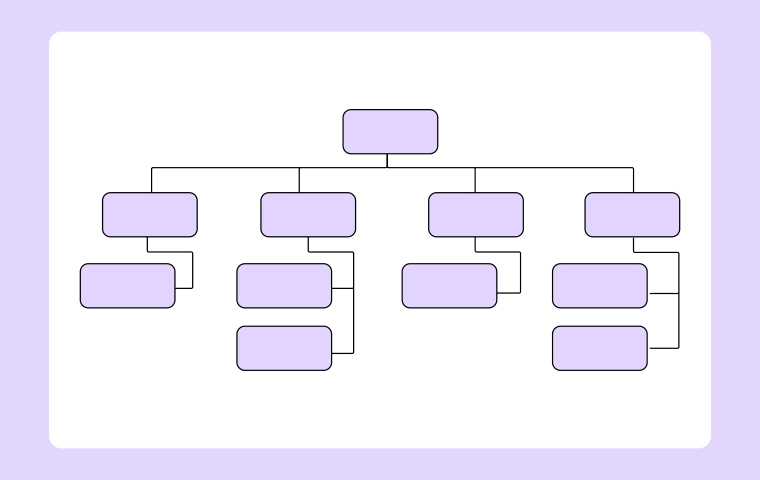
Org Chart
Advantages and Disadvantages of Organizational Charts


AI Workspace for Diagrams & Collaboration
Get your team started in minutes
Sign up with your work email for seamless collaboration.
Organizational charts are very important for bringing about, communicating, and aligning through teams. They, however, have their limitations as any management tool do. Getting to know the two sides assists almost everyone in the organization to take the right decisions regarding the structure, leaders, HR teams, and consultants. In this article, we analyze the advantages and disadvantages of org charts, giving practical tips for creating efficient reporting models and facilitating cooperation between. Making the right choice of design for the organization is the result of being aware of the pros and cons of if your company is expanding or undergoing any changes.
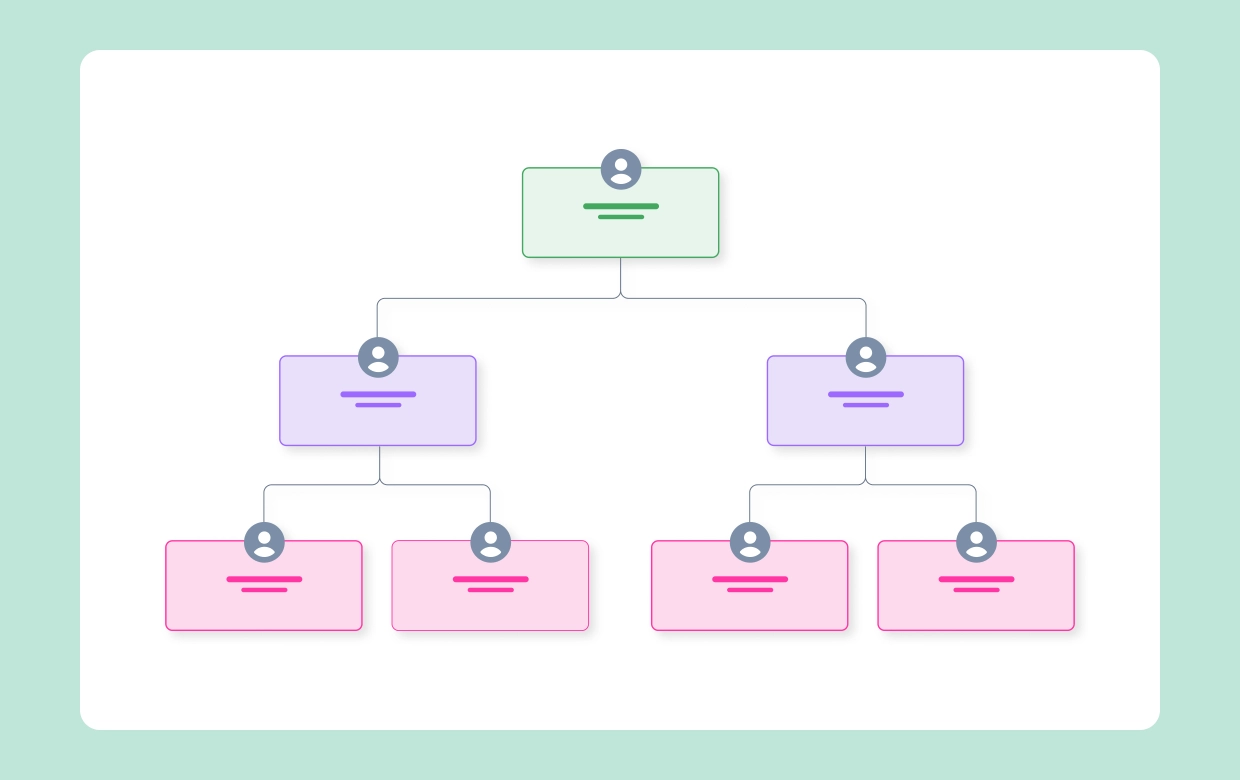
The organizational charts offer the organization a lot of benefits that improve internal clarity, transparency, and communication. They depict the relationships of reporting, decision-making hierarchies, and department structures visually, which helps the employees to understand the company's dynamics easily. When done right, charts can ease the onboarding process, speed up the decision-making process, and also reduce the ambiguity about roles or responsibilities. Check out the Advantages of Organizational Chart Template for a more in-depth analysis of the positive impacts.
Hierarchical structures resolve misunderstandings by revealing employee relationships and the chain of command among the leaders of various departments, as well as the arrangement of the teams. The clarity that comes with showing the reporting relationships melts away the uncertainties and congeals the team cooperation. It also assists the human resources department in recruiting and reorganizing operations. The visual representation of the reporting lines is crucial for the integration of new staff. For basic chart layouts, check the Organizational Chart Template. Hierarchical structures resolve misunderstandings by revealing employee relationships and the chain of command among the leaders of various departments, as well as the arrangement of the teams. The clarity that comes with showing the reporting relationships melts away the uncertainties and congeals the team cooperation. It also assists the human resources department in recruiting and reorganizing operations. The visual representation of the reporting lines is crucial for the integration of new staff. For basic chart layouts, check the Organizational Chart Template. The teams of leaders take advantage of organizational charts to evaluate the number of persons in the team, the distribution of roles, and the capacity of the departments. Charts are beneficial in pinpointing shortages, overworked functions, or the need for new hires. This leads to better talent planning and resource allocation. Moreover, they play a significant role in performance management and succession planning. For more strategic planning resources, see the Purpose of Organizational Chart Template. New recruits find charts very useful in grasping the company's organizational structure, the hierarchy of the management, and the channels of communication. This speeds up the orientation process and boost the new worker's self-esteem while being onboarded. Sometimes, training departments include charts in the orientation papers. If you want more onboarding-friendly choices, check out the Small Business Organizational Chart Template. Organizational charts are beneficial but they also come with certain limitations. Stiff diagrams could reduce the complexity of actual processes to the point of being just a single line, conceal alternative communication ways, and very soon, become irrelevant. Acknowledging these shortcomings helps organizations to create adaptable and realistic forms. Charts must be treated as indicators rather than precise depictions of the entire workflow. For an in-depth analysis of difficulties, refer to the Disadvantages of Organizational Chart Template. Consistent updates to organizational charts are a must; otherwise, they will provide false information regarding reporting relationships and duties. Rapidly evolving roles in fast-growing companies often make it difficult to keep charts updated. Confusion is caused by old charts, and documentation is losing trust because of them. Regular updates are a must for ensuring accuracy. Org Chart Maker Tool is a good option for easy updating. The majority of the workforce operates in a cross-functional manner and diagrams seldom represent informal flows of work or shared responsibilities that are collaborative. Such simplification may lead to unreasonable assumptions regarding task ownership. It could also obscure the relationship between teams who rely on each other. It is imperative for managers to make sure that the diagrams are in line with the real workflow patterns. Check the Structure vs Chart Blog for more clarity in discussions. Charts for organizations might unintentionally lead to a thinking pattern that is top-down or limit creativity when workers think they are restricted by strict reporting lines. The rigidity that has been developed may push the departments not to co-operate. To avoid that companies must use visual tools that are accompanied with practices of the organizational culture that foster airing of views. For balanced perspectives, see the Advantages and Disadvantages Overview Hierarchical representation is what the charts convey and nothing more. Project ownership, inter-team work, and operational processes are not depicted. By doing so, they lose their usability for operational planning completely. Business should adopt a combination of charts, workflow diagrams, and process maps. The Purpose Template will help in understanding the workflow better. Clarity, onboarding, communication and structural planning are conditions that most extensively find charts useful as their support. Charts should not be seen as operational maps but rather as visual guides that assist the current processes. In addition, companies are advised to check their charts every three months for correctness. For additional templates, take a look at the Advantages Template. The communication and clear-cutness are still the main purposes of organizational charts, however, it is comprehension of the limitations that makes teams utilize them right. Organizations by weighing the pros against the cons can evolve charts which will be of help in teamwork, newcomer integration, scheduling and management. Along with the strategic structure design, charts transform into powerful means for unity and making decisions. .webp)
Clarifies Reporting Lines and Authority
Improves Communication and Collaboration
Supports Workforce Planning and Leadership Decisions
Strengthens Onboarding and Training
Disadvantages of Organizational Charts
.webp)
Can Become Outdated Quickly
Oversimplifies Real Responsibilities
May Reinforce Rigid Hierarchy
Does Not Show Workflow or Processes
When to Use Organizational Charts Effectively
Conclusion
1. What is the biggest advantage of using organizational charts?
2. Why do organizational charts become outdated?
3. Do organizational charts show workflow?
4. Are organizational charts necessary for small businesses?
5. Should companies use charts during restructuring?
Start using Cloudairy to design diagrams, documents, and workflows instantly. Harness AI to brainstorm, plan, and build—all in one platform.
Table of Contents

Introduction
 Manage all your work in one placeCollaborate with your teamUse Cloudairy for FREE—forever


 Related Articles

.webp)