Technical Diagramming
Kubernetes vs Docker: Cloud-Native Architectures Compared



Get your team started in minutes
Sign up with your work email for seamless collaboration.
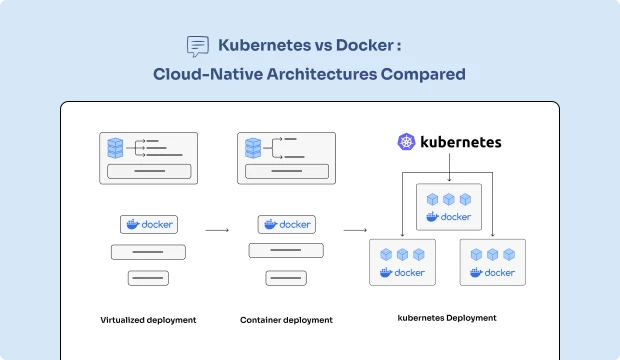
When organizations kick off their personal cloud journey, a major question usually comes up: should they depend on Docker only for containerization, or expand their overall stack with Kubernetes for orchestration? Both technologies truly stand at the very core of cloud‑native architectures, but honestly their purposes are not the same. Docker gives passionate developers the ability to package and smoothly deliver applications consistently across various working environments, while Kubernetes carefully guarantees containers can scale, self‑recover, and reliably run at wider enterprise production levels. By deeply understanding each unique role, businesses naturally set the stage for efficient, forward‑looking systems that strongly support long‑term future goals.
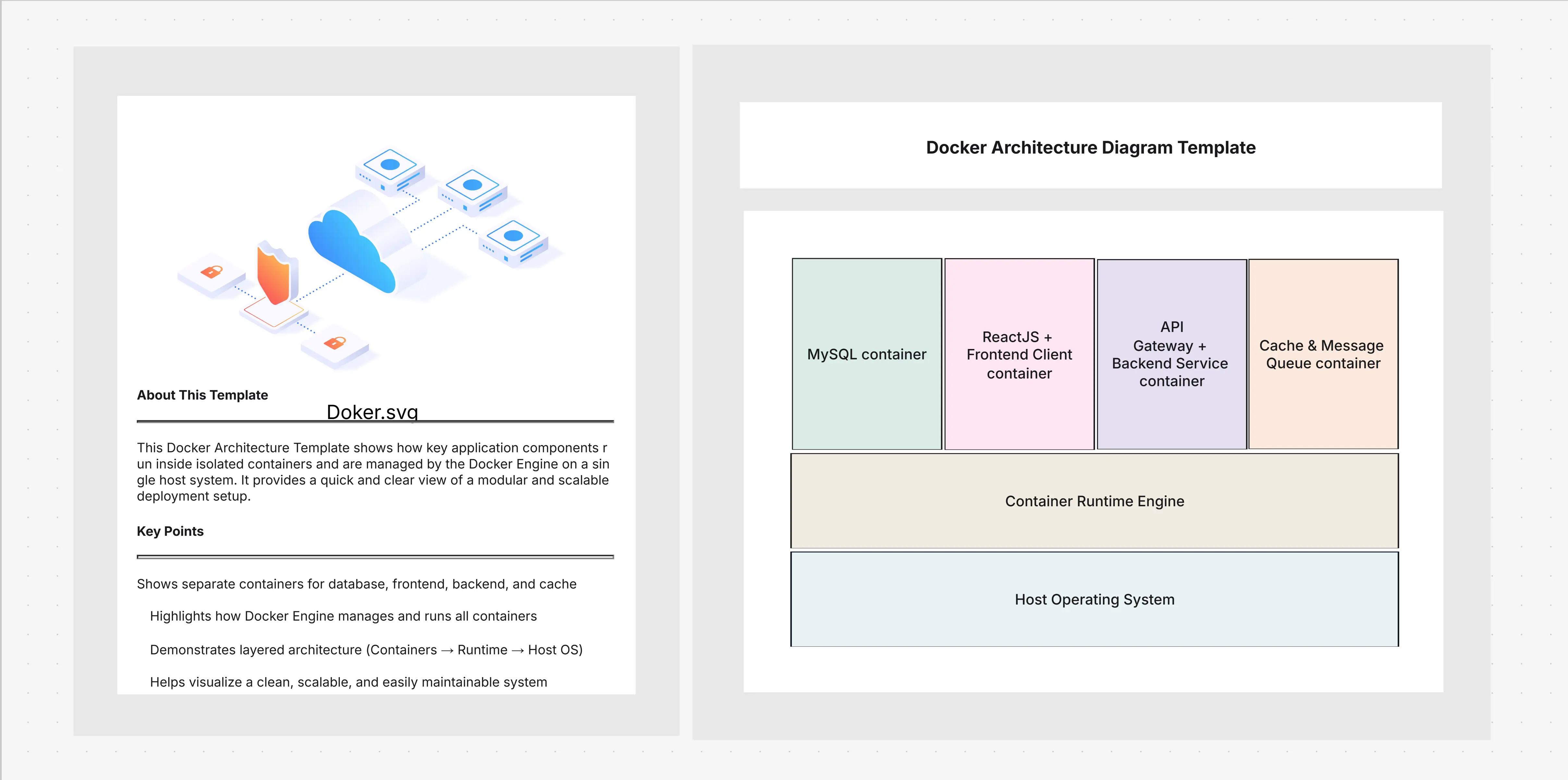
Think of Docker as a game-changer that simplified how modern software is delivered. It introduced lightweight, portable containers that developers genuinely rely on. Instead of messing with manual configurations, you just package the app and its dependencies into a Docker image, which makes deployment anywhere super easy.This has become a cornerstone of modern cloud-native architecture because it finally stops those annoying “it works on my machine” dilemmas we’ve all personally experienced before.
You can also use this Docker Architecture Diagram Template.
Kubernetes goes beyond Docker by providing orchestration the powerful ability, from my personal perspective, to control thousands of containers across various servers. While Docker makes modern applications nicely portable, Kubernetes sincerely guarantees they stay reliable, resilient, and smoothly scalable, which is probably why skilled engineers everywhere casually describe it as the true backbone of cloud-native architecture.
You can also use this Kubernetes Architecture Diagram Template.
 (2).webp)
While many discussions group them together, I’ve noticed firsthand that Docker and Kubernetes tackle completely different tasks, yet they perfectly complement one another.
Most modern architectures combine Docker and Kubernetes, but the emphasis depends on organizational needs.
Templates:
In my honest experience, Docker and Kubernetes should never be treated as stubborn rivals—they’re more like trusted partners for anyone working on resilient cloud-native architectures. Docker personally guarantees applications stay neatly packaged and effortlessly portable, while Kubernetes confidently steps in to orchestrate those very same containers at scale. For most teams I’ve seen, together they provide the true backbone of modern cloud environments. With Cloudairy’s Cloud Architecture Diagram Tool, you can visualize Docker and Kubernetes deployments and adapt them to your organization’s cloud strategy.
Start using Cloudairy to design diagrams, documents, and workflows instantly. Harness AI to brainstorm, plan, and build—all in one platform.
Table of Contents

Introduction
 Manage all your work in one placeCollaborate with your teamUse Cloudairy for FREE—forever
.webp)
.webp)
.webp)


